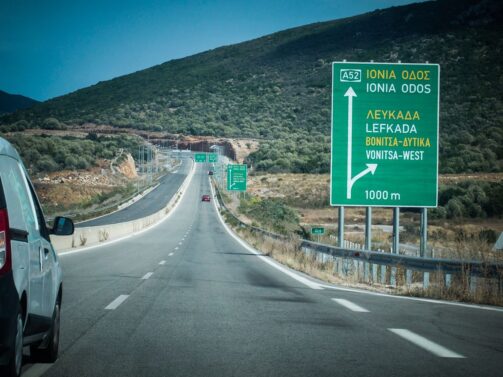
What will be the next El Dorado for the country’s infrastructure projects? Over the previous decade, motorways served as a beacon of hope for the fragmented construction sector. Western Greece, with the Olympia Odos, Ionia Odos and Amvrakia Odos motorways, railway projects and works at the Port of Patras, became the focal point of construction activity in the country.
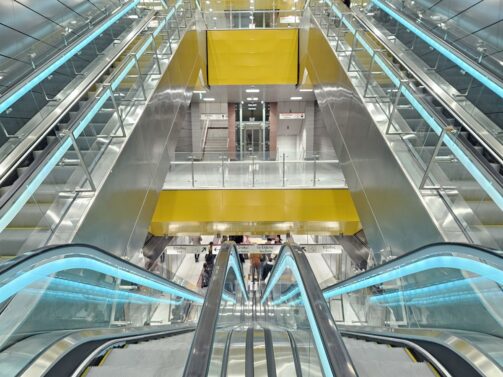
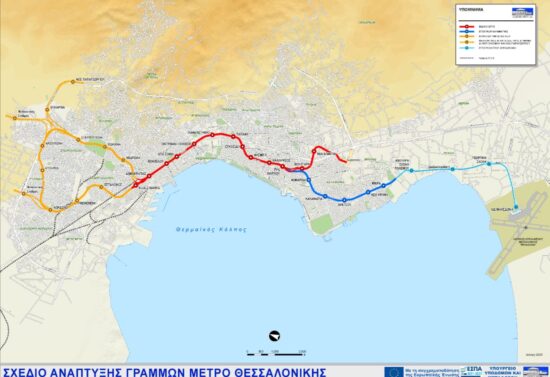
Central Macedonia followed closely, with the Thessaloniki Metro, its extension to Kalamaria, the Aegean Motorway, the Thessaloniki–Potidea–Kassandra road, works at Thessaloniki’s Macedonia Airport, the Katerini ring road and other major projects.
In the current decade, it is clear that Crete has emerged as the major winner in terms of infrastructure development. Projects include the Northern Road Axis of Crete (BOAK), the new airport at Kasteli, electricity interconnections with the Peloponnese and Attica, major hotel investments, waste management facilities, the upgrade of Chania Airport and large-scale irrigation projects, among others.
The island is experiencing an unprecedented wave of development projects, a transformation on a scale Crete has never witnessed before, and this momentum is expected to continue until the end of the current decade.
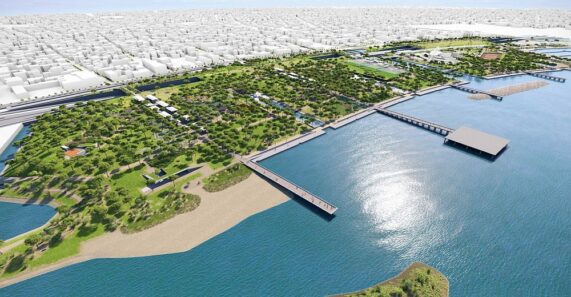
Central Macedonia is also among the regions benefiting the most, with the completion of the Thessaloniki Metro projects, both on the main line and the extension to Kalamaria, the Flyover, the expansion of Pier 6, and the regeneration of western Thessaloniki through investments in the FIX complex, the Pavlos Melas Metropolitan Park, the redevelopment of Aristotelous Square and other projects.
Attica follows closely, with the new Metro Line 4, the Ellinikon development, real estate investments, railway projects, the Double Regeneration project and works at the Port of Piraeus, all of which are significantly strengthening its position in the construction sector.
The next decade belongs to Attica
For the next decade, it is clear that Attica is set to take the lead. A series of major projects, although still lacking more specific implementation timetables, are being planned and are expected to once again transform the metropolitan area where more than four million people live and work.
The first major challenge concerns the extensions of Attiki Odos, investments expected to cost more than €1 billion. These include the Ilioupoli Tunnel and extensions of the motorway towards Lavrio and Rafina. If sufficient funding is mobilised, railway extensions to the two ports could also move forward.
Another major priority will be the Metro extensions to Ilion (Line 2) and Marousi (Line 4). These two projects are expected to require investments of approximately €2 billion. Completing the works on Metro Line 4 between Alsos Veikou and Goudi will also be a key challenge, as the project has experienced some delays and disruptions.
Another major investment will be the new Elefsina–Oinofyta road axis, which will create the long-discussed Attica bypass. The project could potentially be combined with a new railway line, as would typically be the case with a similar infrastructure project elsewhere in Europe.
Work on the Ellinikon development will also continue, with Phases II and III expected to complete Lamda Development’s transformation of the area.
Major projects are also expected to support the further development of the logistics sector in the Aspropyrgos area.
Very large-scale projects are also planned at Athens International Airport, including the expansion of the existing terminal and the construction of a second terminal. These projects will allow annual passenger traffic to exceed 50 million passengers and will completely transform the airport.
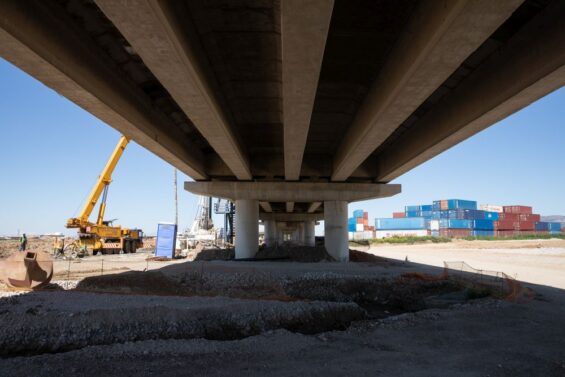
New infrastructure interventions are also expected at the Port of Piraeus, as growing container-handling needs are likely to create the need for the development of a new, fourth pier.
There is also a strong possibility that, after decades of inconclusive discussions, a new KTEL intercity bus terminal will finally be developed in Eleonas, providing Attica with a modern transport facility.
Significant momentum is also expected in investments for new waste management facilities, which now appear unlikely to be developed within the current decade in time to meet Attica’s needs.
The second major winner
The second region expected to benefit the most appears to be Central Macedonia. Here, the western extension of the Thessaloniki Metro is expected to mature and move into the construction phase. At the same time, expansion projects are anticipated at Macedonia Airport, while additional investments could also take place at the Port of Thessaloniki.
Across the wider region, major road projects are expected to be completed, including the Thessaloniki–Edessa and Drama–Amfipoli axes, which are currently in the tendering process, as well as the upgrade of the Thessaloniki–Evzoni corridor to motorway standards.
Major railway projects are also expected to move forward, including the new Thessaloniki–Kavala–Xanthi railway line, the Western Thessaloniki Suburban Railway and the electrification of the Thessaloniki–Promachonas railway line, among others.
Western Greece is also expected to rank among the regions benefiting from major infrastructure investment over the next decade, with significant railway projects such as the Rio–Patras and Patras–Pyrgos sections expected to move forward.
In terms of road infrastructure, the Pyrgos–Kalo Nero–Tsakona corridor is expected to be implemented in phases, along with the connection between Agrinio and the Ionia Odos motorway.
For more details and the complete article in Greek, click here
ΜΗΝ ΞΕΧΑΣΕΤΕ
- Ακολουθήστε το ypodomes.com στο Google News και μάθετε πρώτοι όλες τις ειδήσεις για τις υποδομές στην Ελλάδα
- Αν είστε επαγγελματίας του κλάδου, ακολουθήστε μας στο LinkedIn
- Εγγραφείτε στο Ypodomes Web TV